Standing-Seam Metal vs. Architectural Shingles in East Tennessee: The 30-Year Cost
The price gap is what stops the conversation. A homeowner gets a shingle number and a metal number, sees roughly double, and assumes the metal quote is a luxury upgrade being pushed on them.
Sometimes it is. Sometimes the shingle roof is the more expensive decision, and the difference comes down to one question that has nothing to do with materials: how long do you plan to own the house? Valor Roofing installs both systems, and we would rather explain the break-even honestly than sell the wrong one.
What you are actually comparing
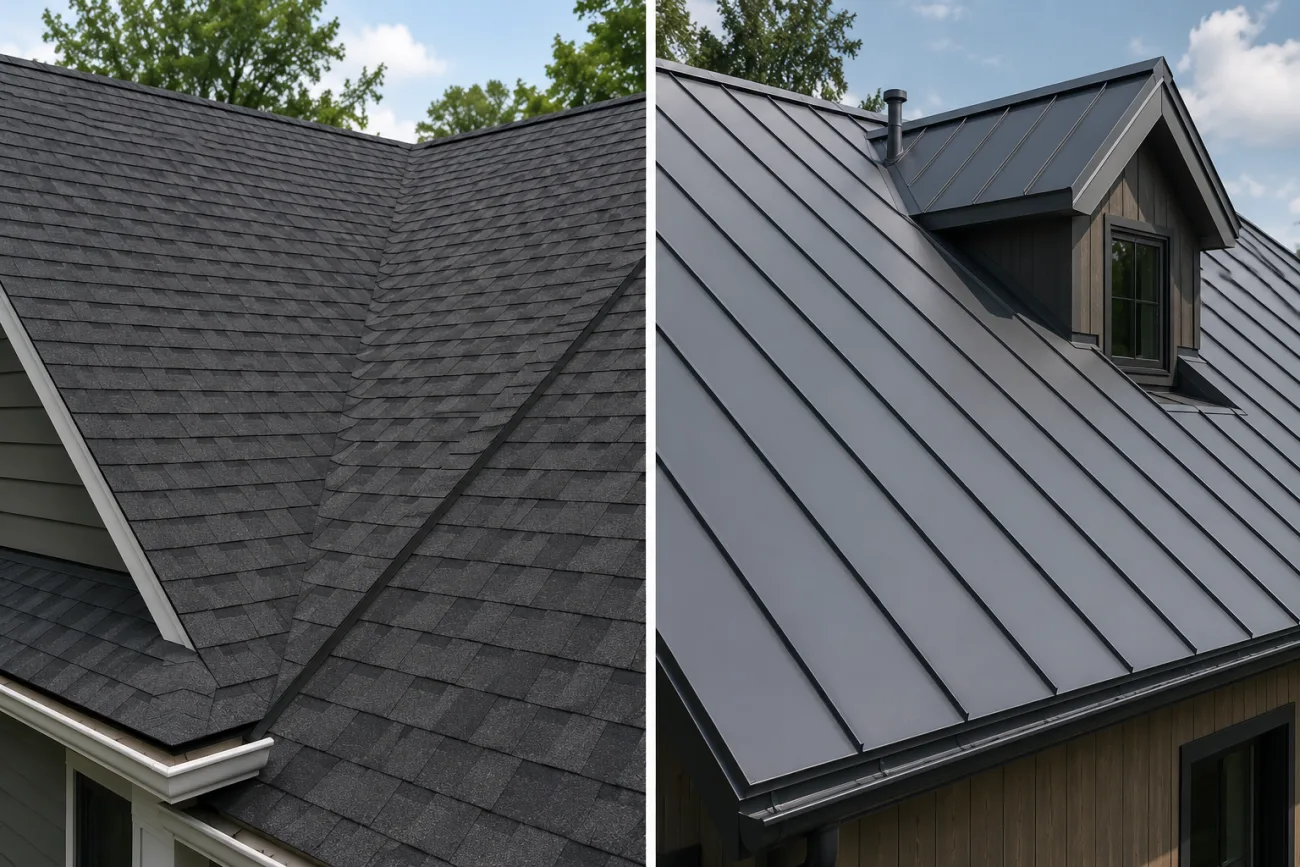
Architectural asphalt shingles are laminated two-layer shingles, the default residential roof across Knox, Blount, and Anderson counties. Wide color range, every contractor installs them, repairs are simple.
Standing-seam metal is formed steel or aluminum panels running vertically from ridge to eave, joined by raised seams with the fasteners concealed underneath. No screws penetrate the weather surface. That makes it a different product from the exposed-fastener panels on barns and outbuildings, where gasketed screws go through the panel face and need periodic re-tightening.
The upfront numbers
In 2026, architectural shingles are in the range of $4.50 to $9.00 per square foot installed, and residential standing seam in the range of roughly $10 to $17 per square foot installed.
Pitch, roof complexity, decking condition, and panel specification move a project within those bands, which is why an accurate figure requires a measured roof rather than an average.
| Architectural asphalt | Standing-seam metal | |
|---|---|---|
| Installed cost per sq ft | $4.50 to $9.00 | $10 to $17 |
| Typical 22-square roof | $10,000 to $19,800 | $22,000 to $37,400 |
| Realistic East Tennessee service life | 20 to 25 years | 40 to 60 years |
| Cost per year of service | roughly $450 to $800 | roughly $440 to $750 |
| Roofs needed over 50 years | 2 | 1 |
| Tear-offs and disposal over 50 years | 2 | 1 |
| Repairs | Simple, any contractor | Specialist, panel-length replacement |
| Color matching later | Difficult past 10 years | Straightforward |
Look at the cost-per-year row. The two systems land close, which is what most comparison articles get wrong in both directions. Metal is not the money-saver its marketing suggests, and shingles are not the obviously economical choice either. Per year of service it is close to a wash, so the decision turns on something else.
The break-even is your ownership horizon
Metal recovers its premium in the years after a shingle roof would have needed replacing. Sell before that point and you have paid for longevity the next owner inherits, since buyers in inland markets rarely price a metal premium into their offers.
- Under 8 years in the home: Shingles. You will not reach the second roof, and the extra $12,000 to $18,000 is unlikely to come back at closing.
- 8 to 15 years: Shingles usually still win. A quality architectural system with correct ventilation will not need replacing in that window.
- 15 to 25 years: It depends on the size of the gap on your specific roof. Get both numbers before deciding.
- 25 years or a forever home: Metal, in most cases. You avoid a second tear-off, a second dumpster, and a second round of labor at whatever labor costs in 2050.
If cash flow rather than horizon is the constraint, that is a different problem. Valor's financing options include a soft-pull pre-qualification that does not affect your credit.
The two questions Knoxville buyers actually ask
Is a metal roof loud in the rain?
Far less than the reputation suggests. The noise everyone remembers comes from exposed-fastener panels over open purlins on a barn, with nothing between the metal and the air. A residential standing-seam roof sits on solid decking, over synthetic underlayment, above an insulated attic.
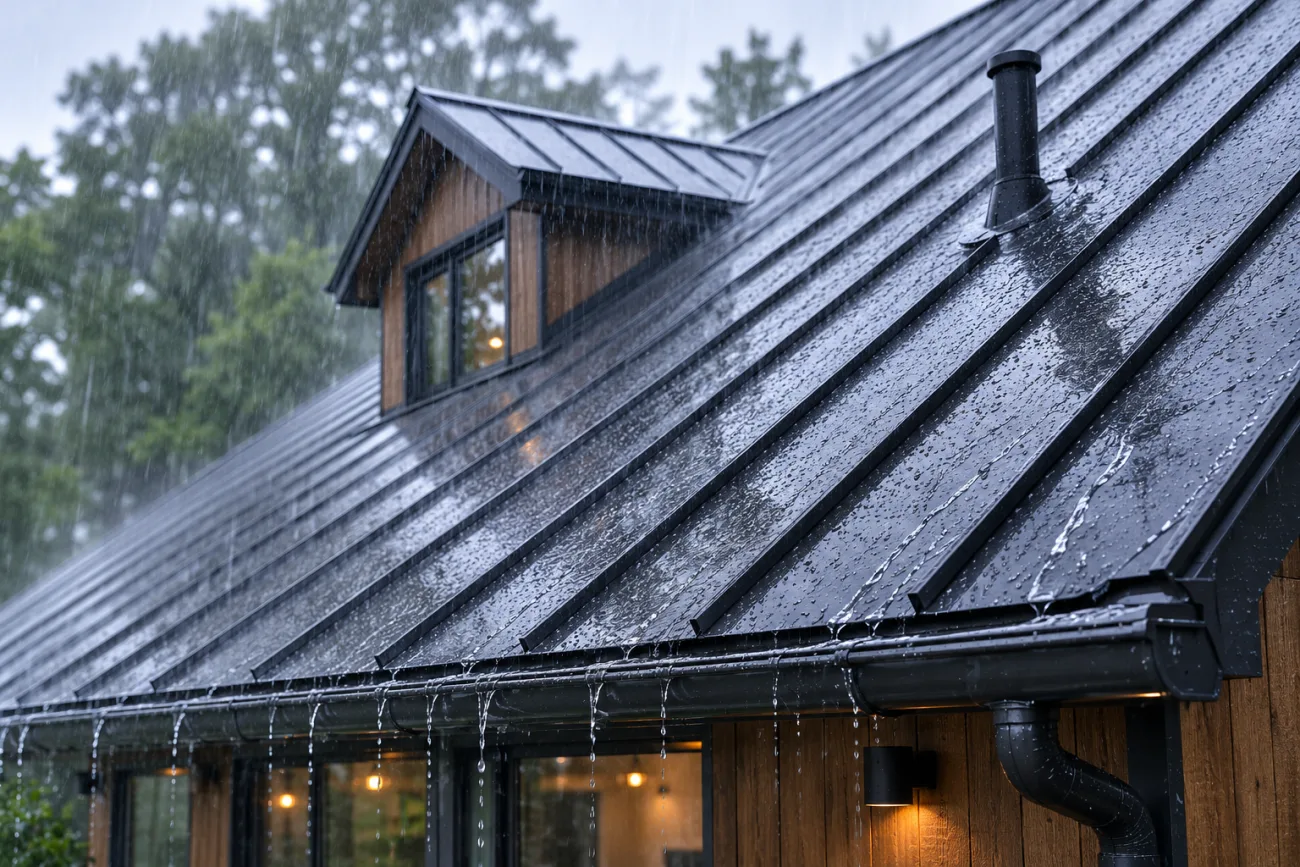
Ask your contractor what goes between the panel and the deck. High-temperature synthetic underlayment is standard, and some installations add a slip sheet or a vented batten assembly that also creates above-sheathing ventilation. Research at Oak Ridge National Laboratory found that metal roofs with above-sheathing ventilation substantially reduced heat flow through the roof and ceiling and dampened attic temperature swings.
What happens when hail hits it?
Standing seam handles hail well structurally. Panels shed impacts that would bruise or fracture a shingle mat, and a dented panel almost always keeps working as a water barrier.
The complication is insurance. Cosmetic damage exclusions are endorsements that remove coverage for hail damage that mars appearance without impairing function, and they apply most often to metal roofs. The concept originated with state-adopted endorsements such as the Texas Department of Insurance's Endorsement HO-145 and has since spread across carriers nationally. A metal roof with 200 visible dents and no leaks can be a covered loss under one policy and pay nothing under another.
Before you install metal, pull your declarations page and ask your agent whether a cosmetic damage exclusion applies, then ask what it costs to remove it. That question takes five minutes and can be worth five figures.
Specifications that separate two metal quotes
Two standing-seam bids can differ by $8,000 and look identical on paper. Three lines explain most of it.
- Gauge: Steel thickness, where a lower number means thicker metal. Residential standing seam commonly runs 24 or 26 gauge. Twenty-nine gauge belongs on agricultural buildings and dents from a dropped tool.
- Seam type: Snap-lock panels press together and suit most residential pitches. Mechanically seamed panels are folded on site with a seaming machine, cost more, and perform better on low slopes and exposed wind sites.
- Coating: PVDF finishes hold color and gloss far longer than lower-grade polyester. Finish warranties should be in writing with a stated term for chalk and fade.
Also ask about oil canning, the slight waviness visible in flat metal at certain angles. It is an inherent characteristic rather than a defect, and striations or a heavier gauge reduce it. A contractor who says it never happens has not installed much metal.
When shingles are the right call
Metal is not the answer for every Knox County home. Complex roofs with many dormers, hips, and valleys drive panel fabrication and flashing labor up sharply, which widens the gap. Some Farragut and West Knoxville subdivisions carry HOA covenants restricting roofing materials, worth confirming before you shop. And a well-installed architectural roof with correct ventilation and quality flashing will serve a Knoxville home for two decades.
Frequently asked questions
Is a metal roof worth it in Tennessee?
It depends primarily on how long you will own the home. Metal generally pays off past roughly 25 years of ownership because you avoid a second replacement, and shingles are usually the better financial choice under 15 years.
How much more does a metal roof cost than shingles?
Standing seam typically runs about two to two and a half times the installed cost of architectural asphalt. Published 2026 ranges put shingles at $4.50 to $9.00 per square foot and standing seam at roughly $10 to $17 per square foot installed.
How long does a standing-seam metal roof last?
Forty to sixty years is the realistic range for a properly installed residential system, and the finish rather than the metal is usually the limiting factor. Asphalt shingles in East Tennessee's heat and humidity generally deliver 20 to 25 years.
Do metal roofs attract lightning?
No. Metal roofing does not increase the likelihood of a lightning strike. Because metal is non-combustible and conductive, it is generally considered a favorable material if a strike does occur.
What gauge should a residential metal roof be?
Twenty-four or 26 gauge steel for standing seam. Twenty-nine gauge is thin enough to dent easily and is better suited to agricultural buildings than to a house.
Getting a real number
Every figure on this page is a range. Your roof is a specific number, and it depends on square footage, pitch, how cut-up the roof is, and what the decking looks like underneath.
Valor Roofing measures roofs by satellite and returns fixed pricing on both systems, so you can compare the shingle number and the metal number for your own house rather than a national average.
Request an estimate or call (865) 468-8726, and if you would like to see quotes for both systems, we will send you both.
Free, photo-documented inspection and a firm written price. No pressure, no in-home sales pitch.